
By Parboti Rani Singh from Netrakona
Rural women in Bangladesh continue to play a vital role in food security, indigenous knowledge conservation, and ecological farming despite facing natural disasters, climate impacts, and social violence. Their traditional skills and resilience are keys to maintaining sustainable agriculture and community adaptation.
Marking the ‘International events for the Prevention of Violence against women, a workshop and Nabanna festival was held at the Paharpur Agroecology Learning Centre in Atpara, Netrokona. Forty adolescent girls and local caretakers from 11 villages participated.
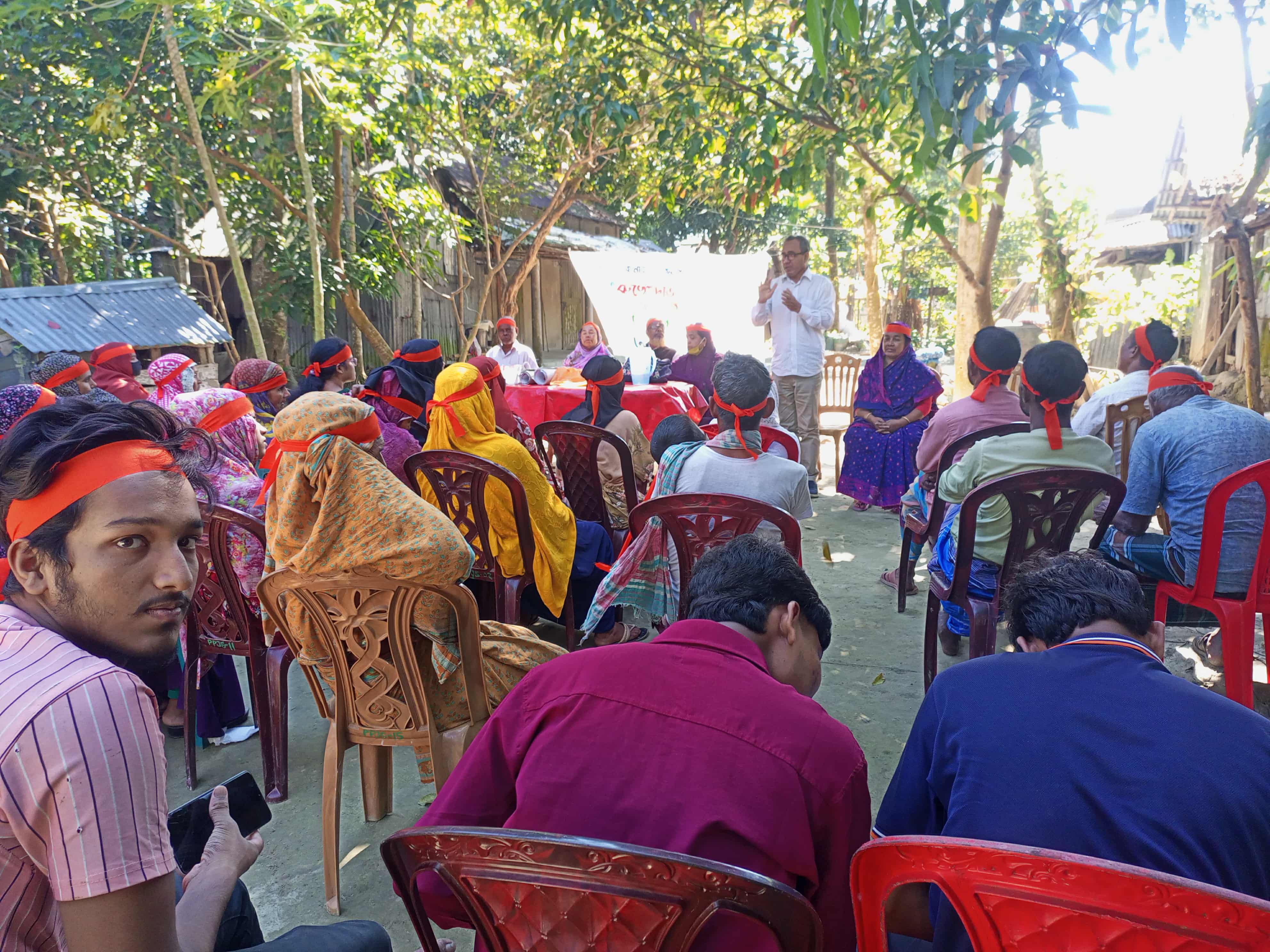
The event was facilitated by community leader Fawzia Nasrin, with guests including journalist Maksudul Islam, famers’ leader Sayed Ahmed Khan Bachchu, women’s rights advocate Hinda Khanam, fisherfolk organizer Jogesh Chandra Das, and BARCIK regional coordinator Md. Ohidur Rahman.
Discussions focused on agroecology, climate justice, food sovereignty, local seed conservation, women’s rights, biodiversity, family farming, and preventing early marriage.
Journalist Maksudul Islam mentioned that women’s traditional knowledge strengthens climate-resilient farming, especially during crises when food shortages arise.
Trainer Fawzia Nasrin emphasized that many women continue farming despite violence and social barriers, keeping rural economies alive. She added that women prefer organic inputs, which protect soil health and the environment, making agriculture more sustainable.
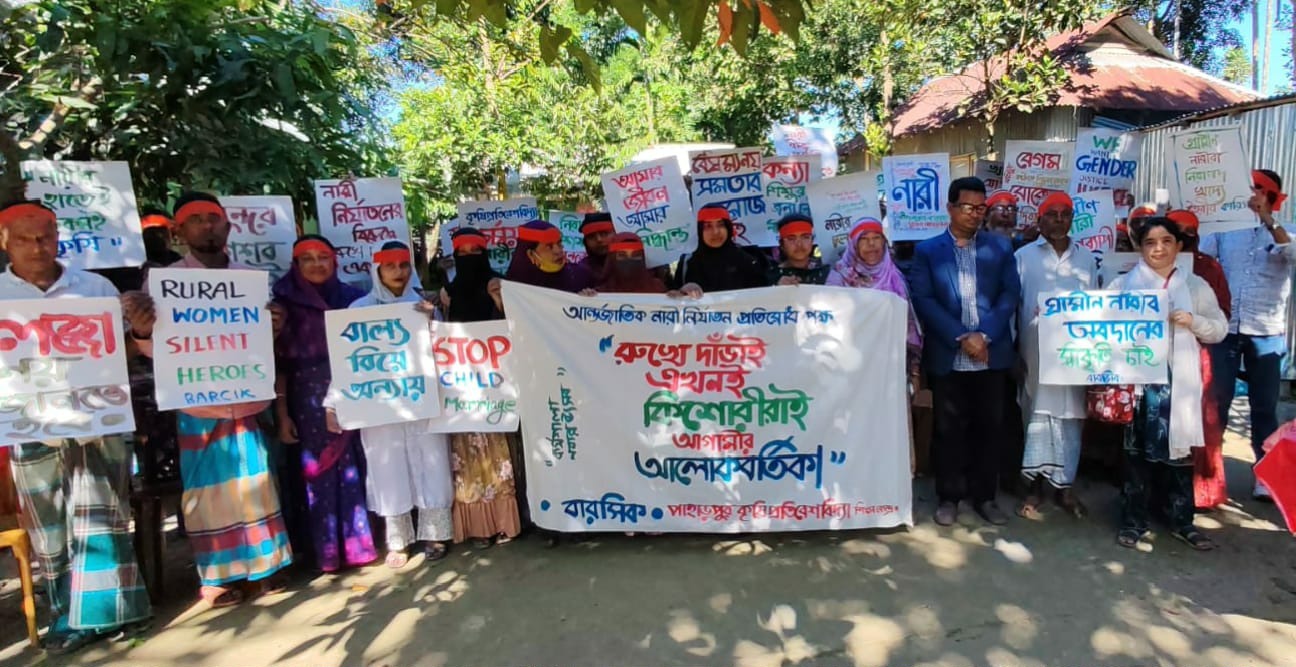
Rural women’s determination, knowledge, and labour remain essential to sustainable farming systems. Ensuring land rights, access to technology, and training can further empower them and contribute to a resilient rural society.
The programme was coordinated by BARCIK officer Parbati Rani Singh.