
By Barsha Gain from the Coast
A training and planning workshop on climate adaptation and agroecological practices was held on Monday (24 November) at the Agroecology Learning Centre in Pankhali village of Burigoalini Union under Shyamnagar Upazila. The workshop aims to address the climate induced crisis and discourage through local adaptation.
A total of 18 participants, including youths, journalists, farmers, Agroecology Learning Centre (ALC) members, and practitioners from Padmapukur, Ishwaripur, Burigoalini, and Munshiganj unions attended the day-long programme.
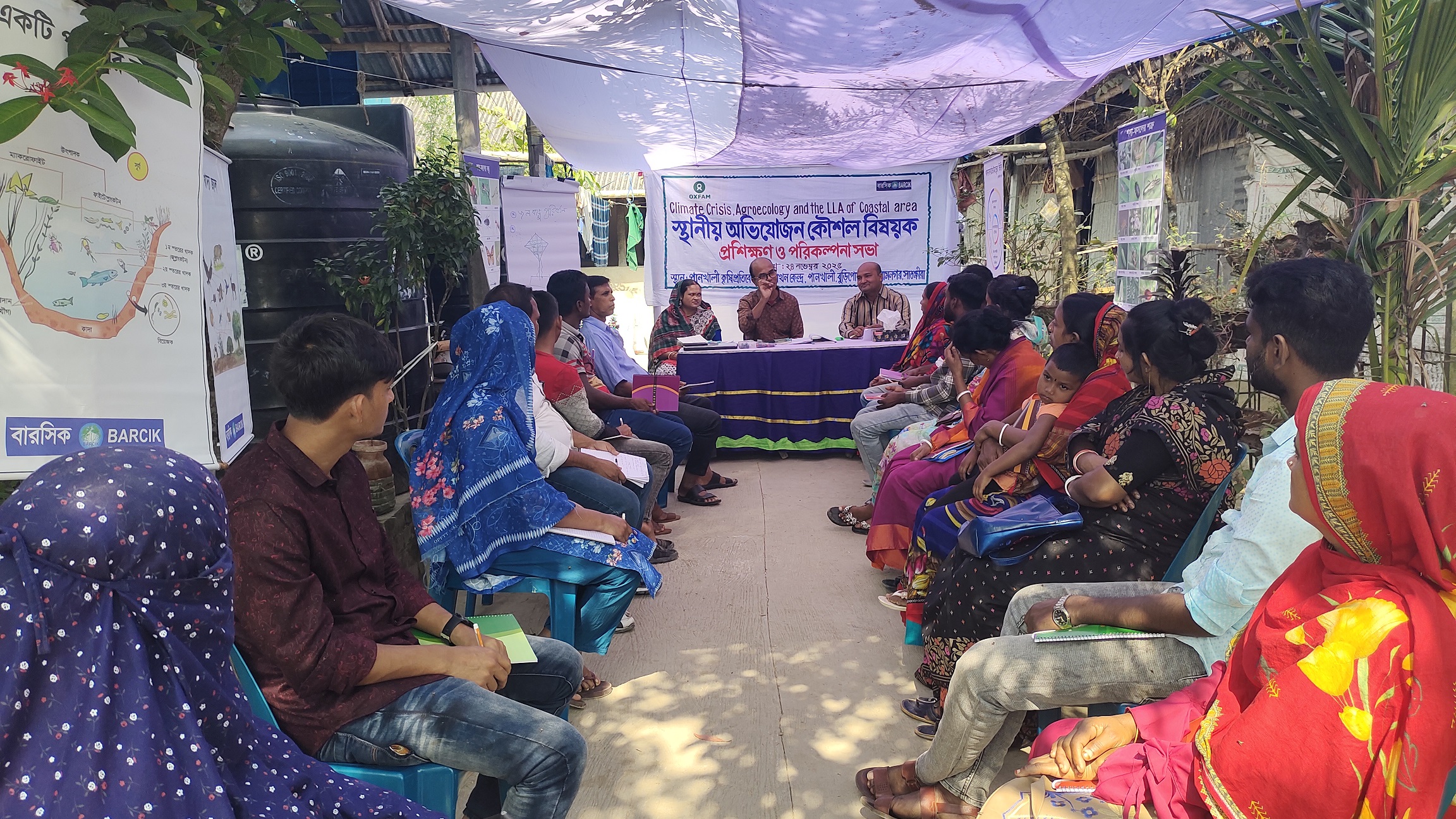
Speaker Ranjit Barman said that salinity is the greatest challenge in the coastal region. He mentioned that expanding saline-tolerant crop varieties along with local adaptation practices can help farmers meet family needs and increase income. He also warned that salinity affects agriculture and poses serious health risks to coastal communities.
Participants emphasized the need to strengthen adaptation practices by building a closer relationship with nature, promoting self-reliance, and improving livelihoods. Through field visits and experience-sharing sessions, they received practical training on climate-resilient agricultural techniques.
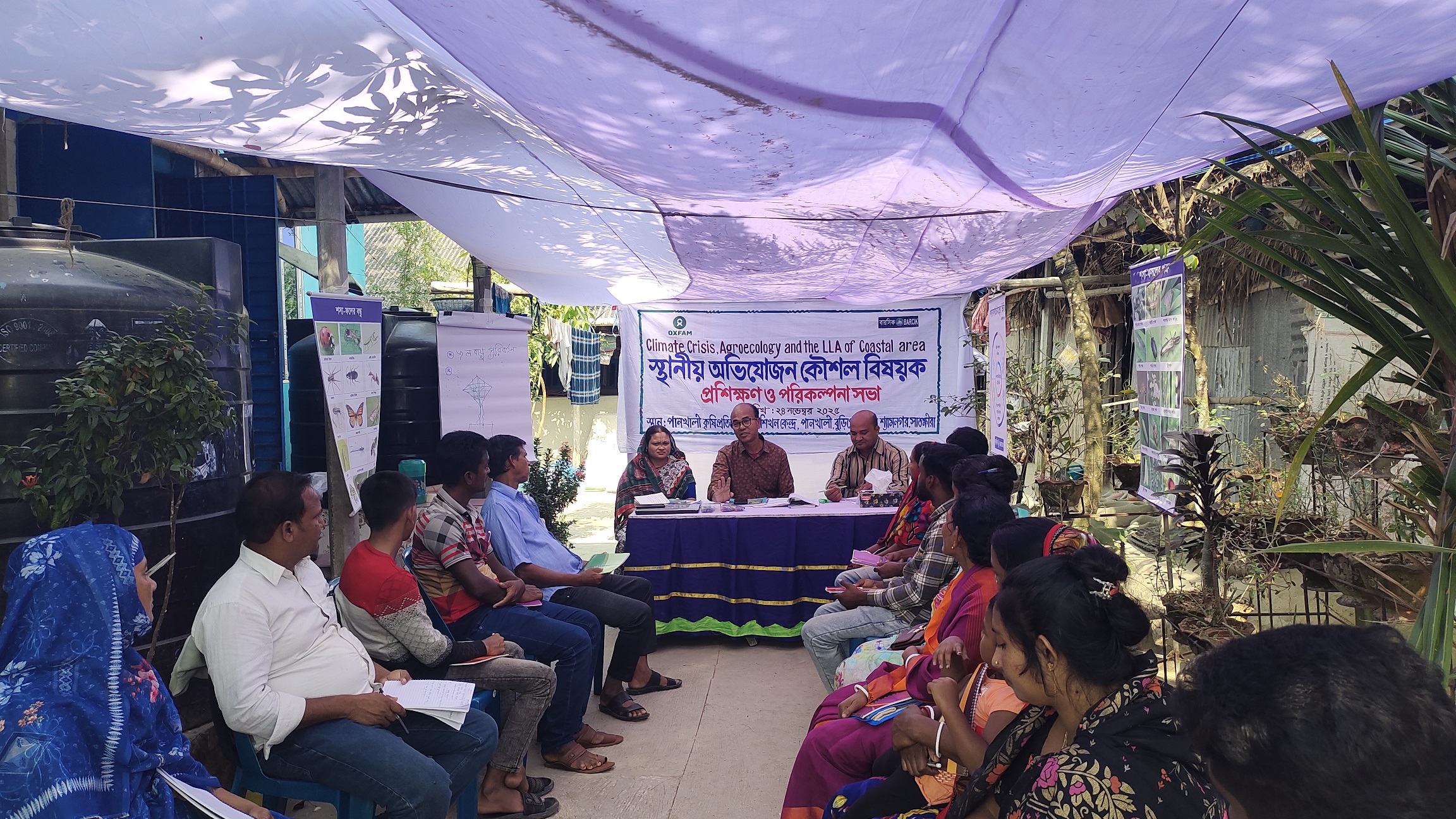
The programme was held under the chairmanship of Konika Rani of the Pankhali Agroecology Learning Centre. Resource persons included Shonkar Mrong, Associate Regional Coordinator of BARCIK Netrakona Resource Centre; Ramkrishna Joarder, Associate Regional Coordinator of BARCIK Shyamnagar Resource Centre; and agroecology practitioners Nimai Mondal and Sarma Rani. The event was facilitated by BARCIK field facilitator Barsha Gain.
It is to mention that climate-induced migration is rapidly increasing in Bangladesh’s coastal regions as cyclones, floods, and rising salinity continue to destroy livelihoods. Forced by economic hardship, many families are moving to urban areas, where they often face new challenges such as insecure housing, poor access to health care and education, and social marginalization.