
By Subir Kumar Sarker, from Ghior, Manikganj
China Akter (45), a resident of Manta village in Manikganj Sadar Upazila, has been practicing indigenous potato cultivation since her marriage, inspired by her mother-in-law. Two varieties of local potatoes such a s Deshi Lal (red) and Deshi Sada (white) are cultivated in her household. Potatoes are a staple ingredient in many dishes and are essential year-round for family consumption. Indigenous potatoes are known for their superior taste.
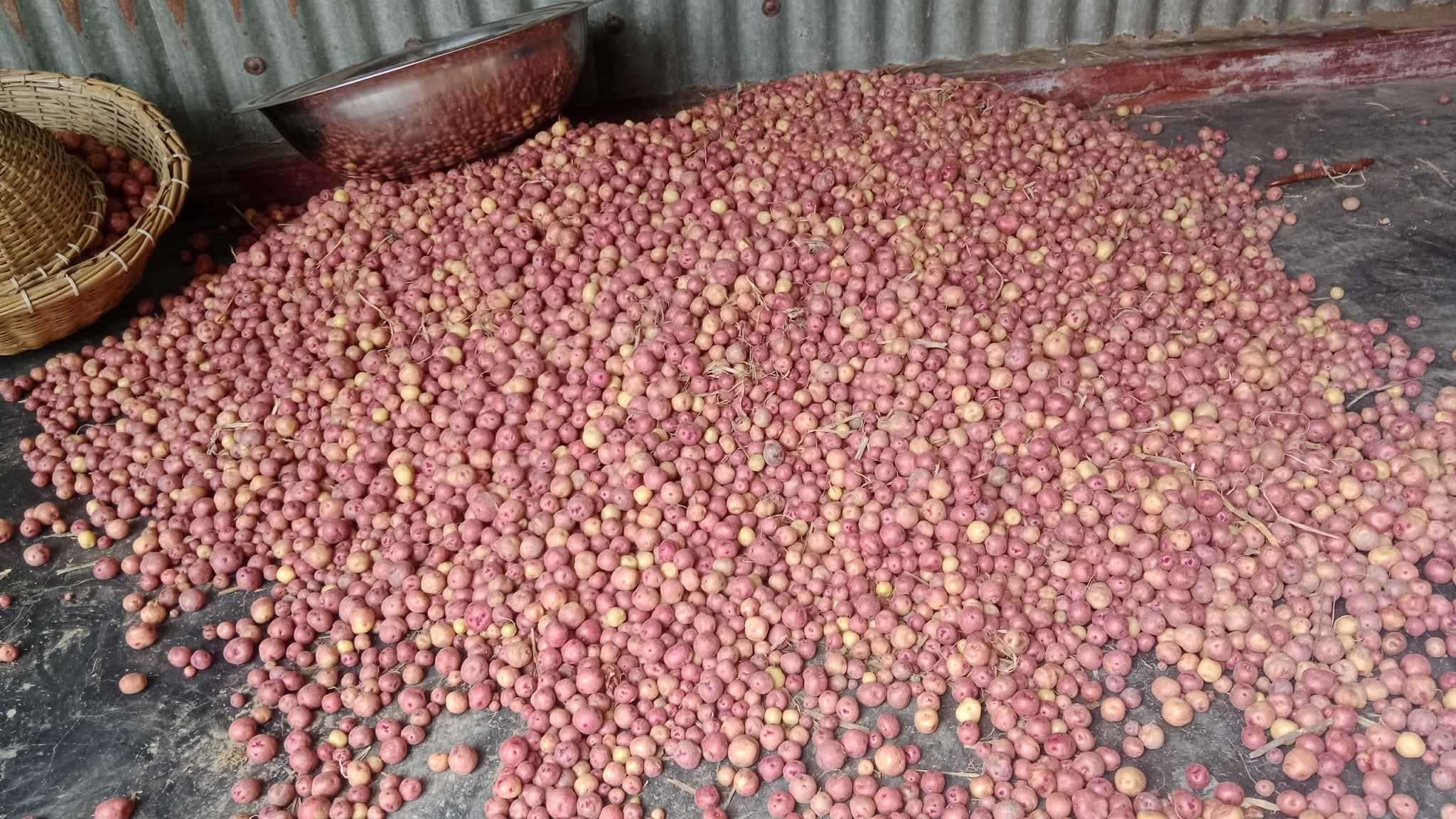
Local potatoes are planted during the post-monsoon period, particularly in the months of Kartik and Agrahayan (October–December). After planting, fields are mulched with rice straw from Aman paddy, which helps retain soil moisture and suppress weeds, reducing production costs.
Farmers typically cultivate indigenous potatoes in homestead lands, including raised and sloped areas. For the past 8–9 years, farmer-researchers such as Md. Monowar Hossain from Dhalai village, Subol Chandra Sarkar from Kunduria, and Sushil Biswas with support from BARCIK have been distributing local potato seeds among farmers to promote their cultivation.
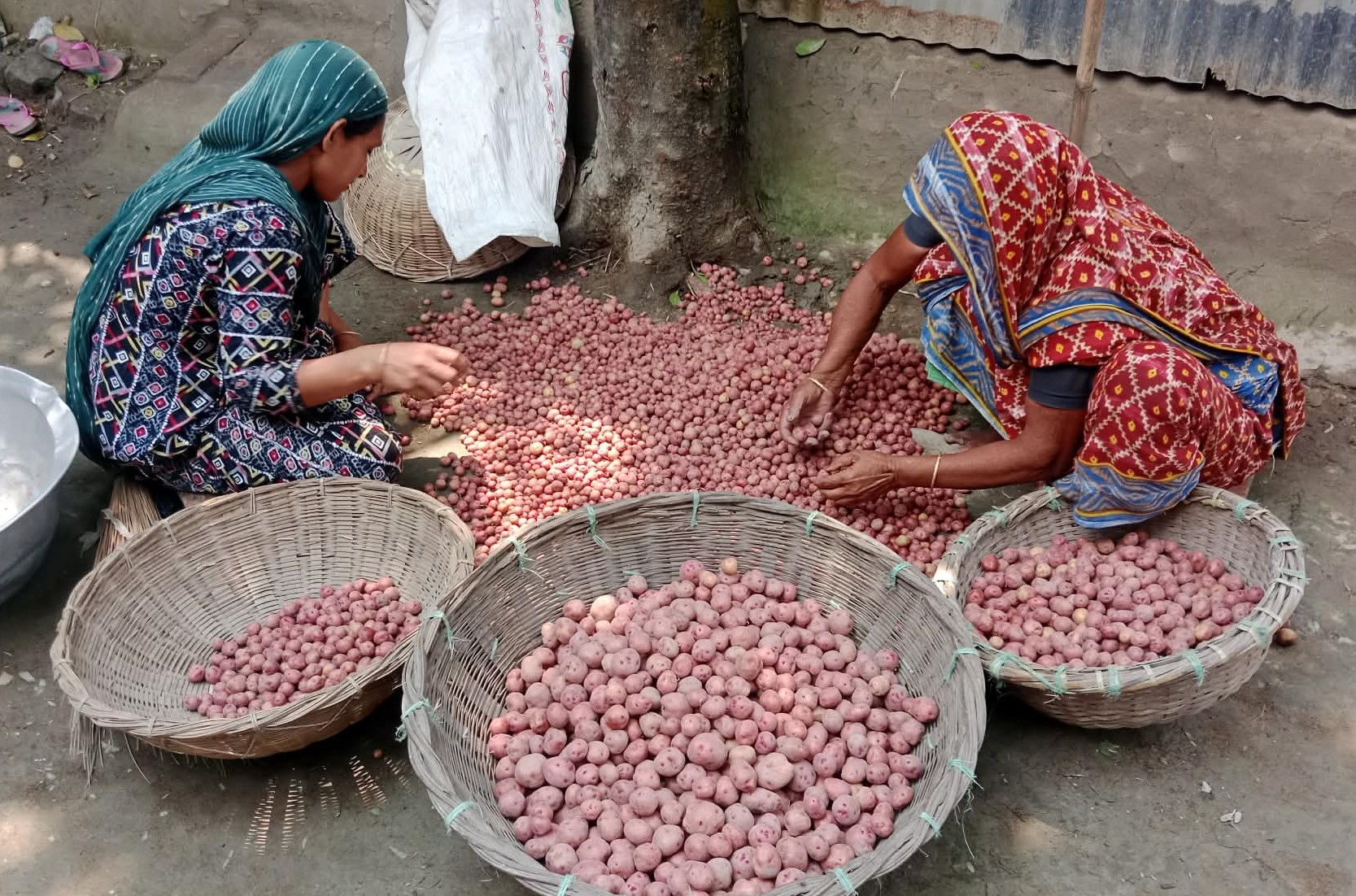
Farmers from villages like Manta, Joynagar, Begomnogor, Dhalai, Sarupai, Kunduria, and Helachia are preserving traditional farming practices by cultivating indigenous crops that are climate-resilient and support food security. They typically grow potatoes on 5–10 decimals of land near their homes to meet yearly household demand.
China Akter said, “I meet my family’s yearly potato demand and sell the surplus at 30–40 taka per kilogram. I conserve seeds in baskets under a cool place beneath the house platform.” Shje mentioned that indigenous potato farming requires low cost and faces fewer pest problems. If insects attack, we use bamboo ash as a natural remedy.