
By Barsha Gain from the coast
Life in the coastal regions has become increasingly difficult as people face new environmental challenges every day. Farmers, in particular, are being forced to adapt to changing conditions in order to survive. Without adopting new adaptation strategy, they risk losing their livelihoods entirely.
Bhagabati Rani Mondal, a 38-year-old woman from West Jelekhali village in Shyamnagar, Satkhira, represents resilience in the face of climate adversity. Even after suffering a brain stroke, she refused to give up. Instead, she turned her limited resources into opportunities, working tirelessly to improve her family’s economic condition while embracing sustainable agricultural practices.
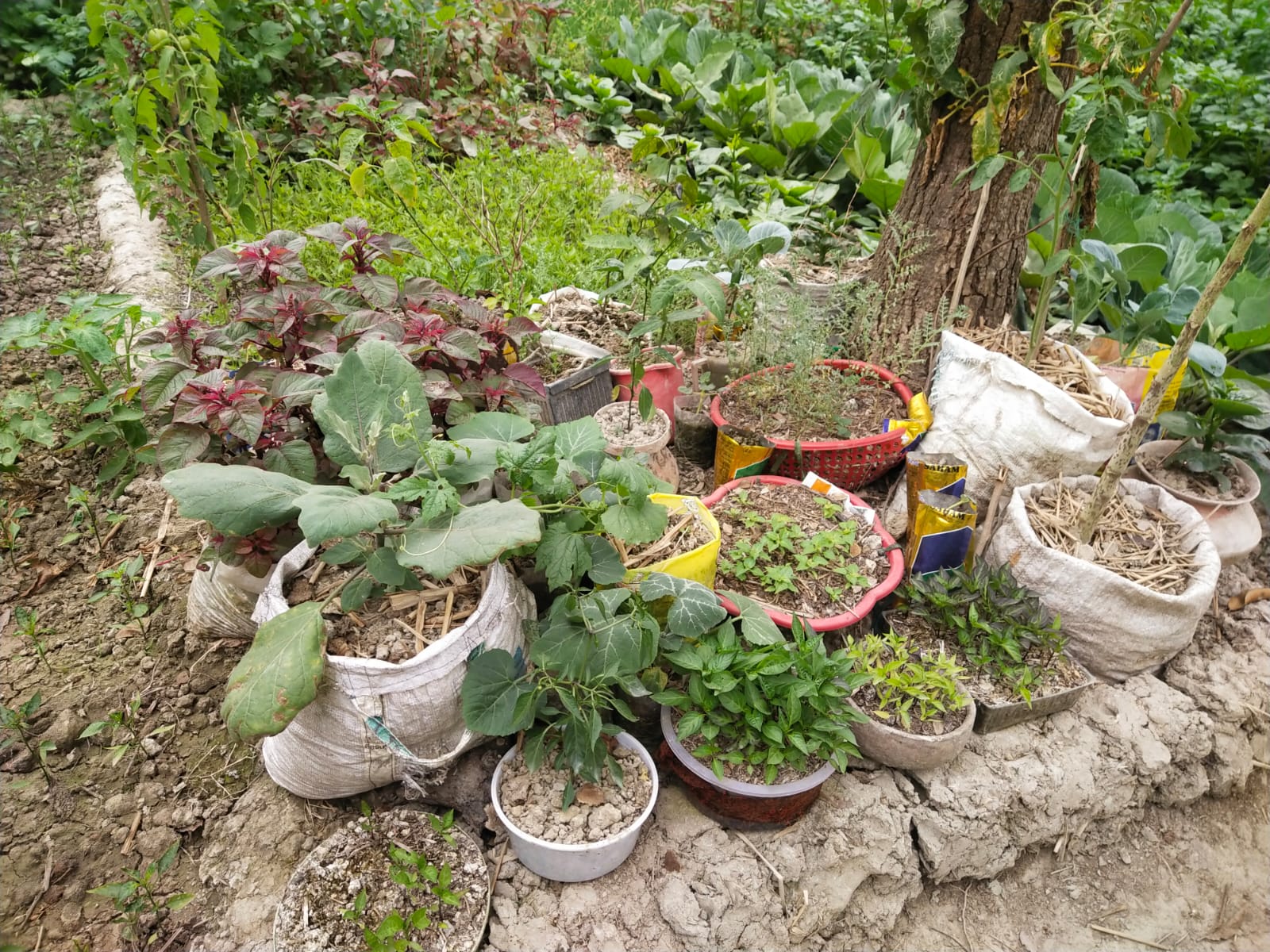
With only a small homestead and a few bigha of lands, Bhagabati supports her three-member family through a combination of farming and day labor. She believes that increasing income alone is not enough to achieve financial stability; reducing expenses is equally important. This understanding has shaped her approach to life and work.
After becoming involved with BARCIK, Bhagabati received training on climate-resilient farming methods. Through workshops and practical experience, she learned how to conserve local seeds, produce organic fertilizers, create vermicompost, and cultivate crops using innovative techniques such as container farming, raised beds, and mulching. She applied this knowledge creatively, transforming her limited space into a productive agroecological practices.
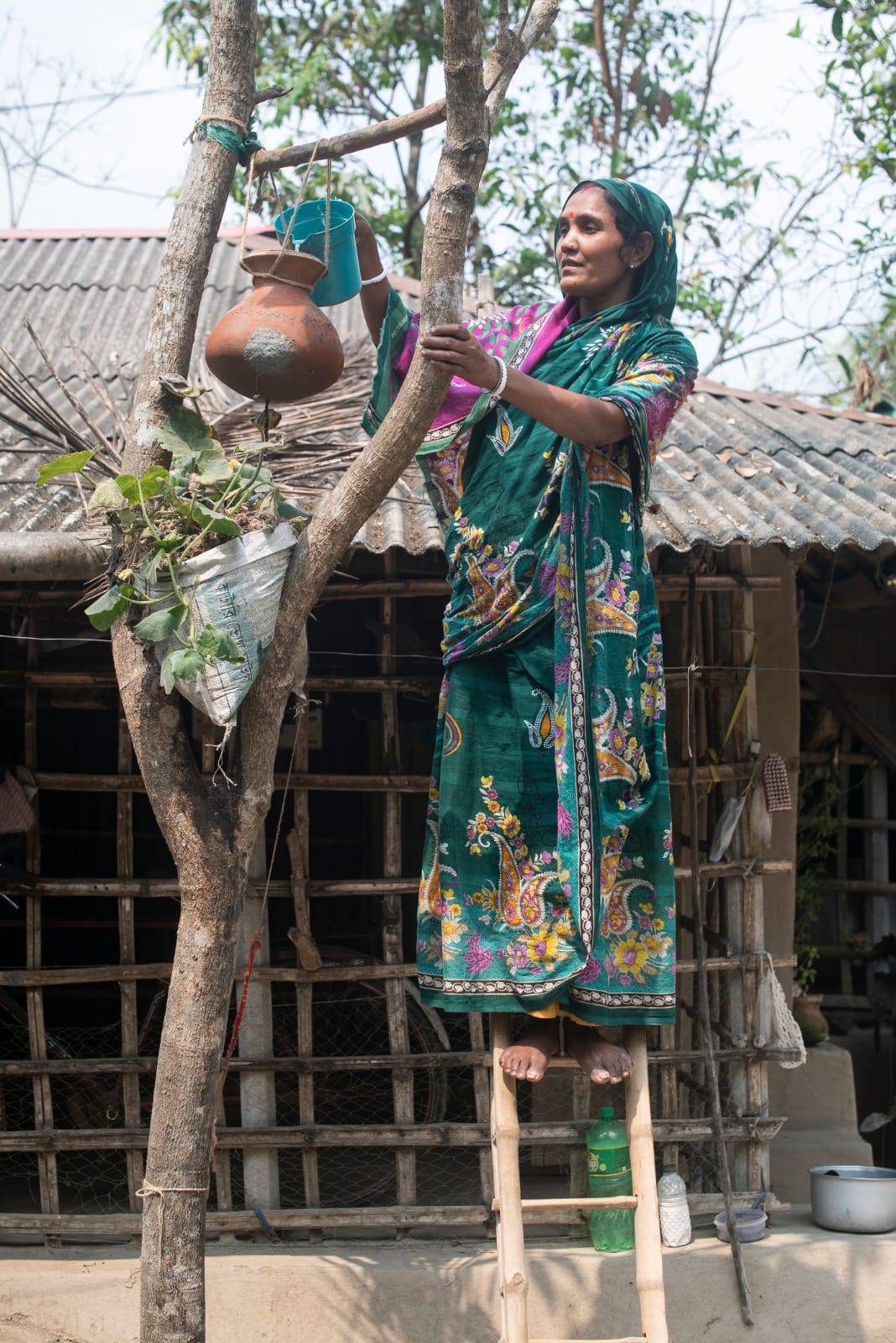
Where vegetables once struggled to grow, she now cultivates various climbing plants such as gourds and beans in sacks along pond banks. She has even adapted vertical farming techniques, growing crops in a way that vines extend onto the roof of her home, helping to keep the house cool while maximizing production. By using mulching, she has reduced the need for irrigation, enabling her to grow vegetables even during water-scarce summer months.
These efforts have brought significant improvements to her household. She now earns a steady income from vegetable production, rice cultivation, and livestock rearing. Additionally, her ginger cultivation has proven successful, further contributing to her financial stability. As a result, her family depends much less on market purchases, leading to reduced expenses and a better quality of life.
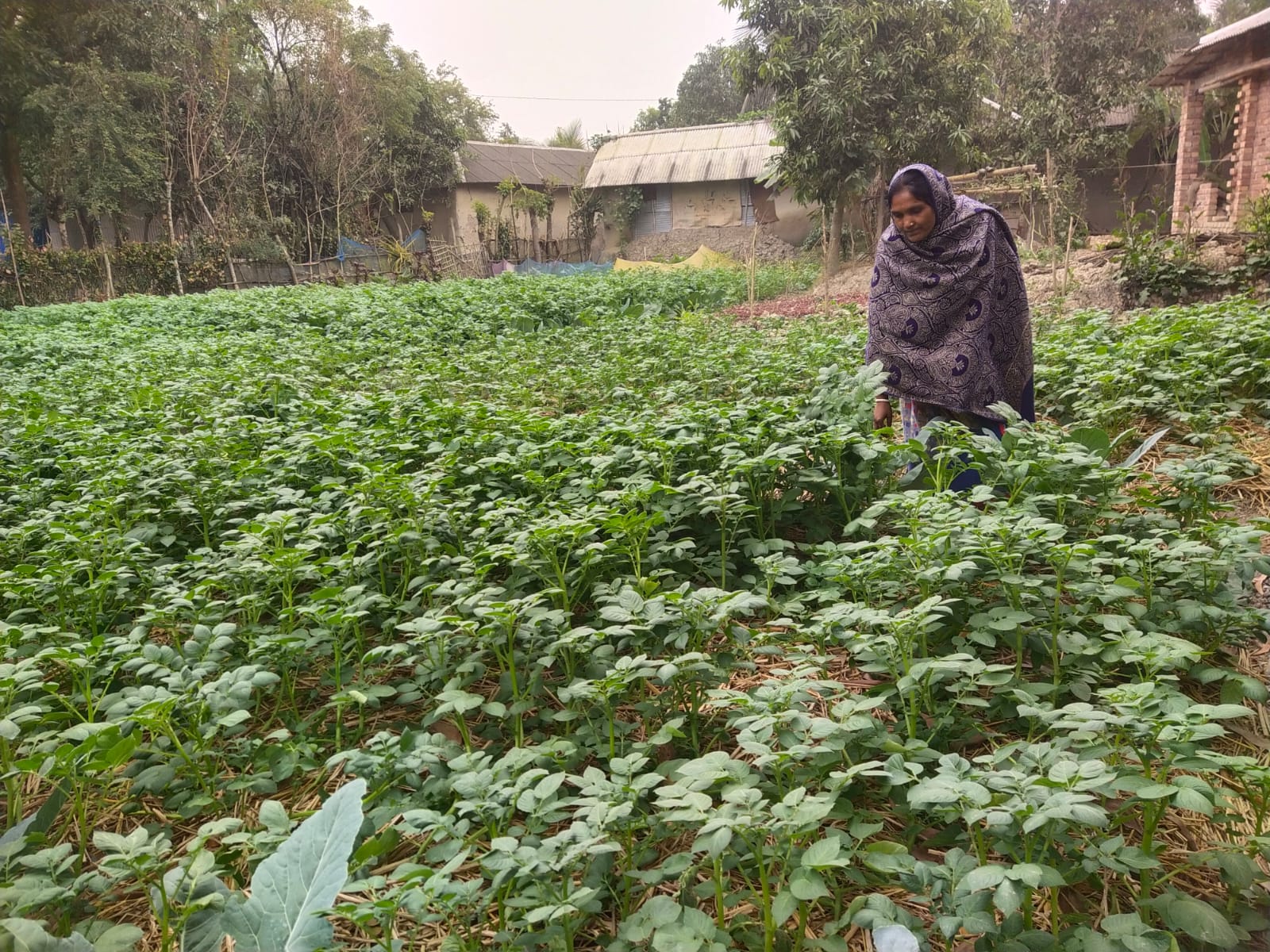
Bhagabati’s achievements extend beyond agriculture. She has become a symbol of women’s empowerment in her community. Using tailoring skills she learned before marriage, she built a trade that has grown steadily over time. She has also trained around 25 local women, helping them become financially independent. Her initiative has even enabled her sister to establish a successful business.
Today, Bhagabati supports her own family and inspires others. She actively shares her knowledge on agroecological practices and climate adaptation, encouraging community to adopt environmentally friendly practices. Her journey demonstrates that with determination, innovation, and proper guidance, it is possible to build a sustainable future even in challenging coastal environments.