
By Asia Akter from Manikganj
Just as a torn fishing net disrupts fishing, the loss of traditional professions threatens our survival. Today, many age-old traditional occupations are disappearing due to large industries and climate change. One such endangered craft is bamboo work practiced by the Moni Rishi community.
Khirolal Moni Das (63), from Baimail Rishipara village in Singair Upazila of Manikganj, has spent 56 years practicing bamboo craftsmanship since the age of seven. He lives with his elderly mother, two sons, a daughter-in-law, and a grandson. He recalls several devastating climate events. The flood of 1988 forced his family to take shelter on roads as their home submerged. In 1998, they lived on raised platforms inside their house, even keeping their cattle on the road. Food and drinking water were scarce, and illness spread within the family.
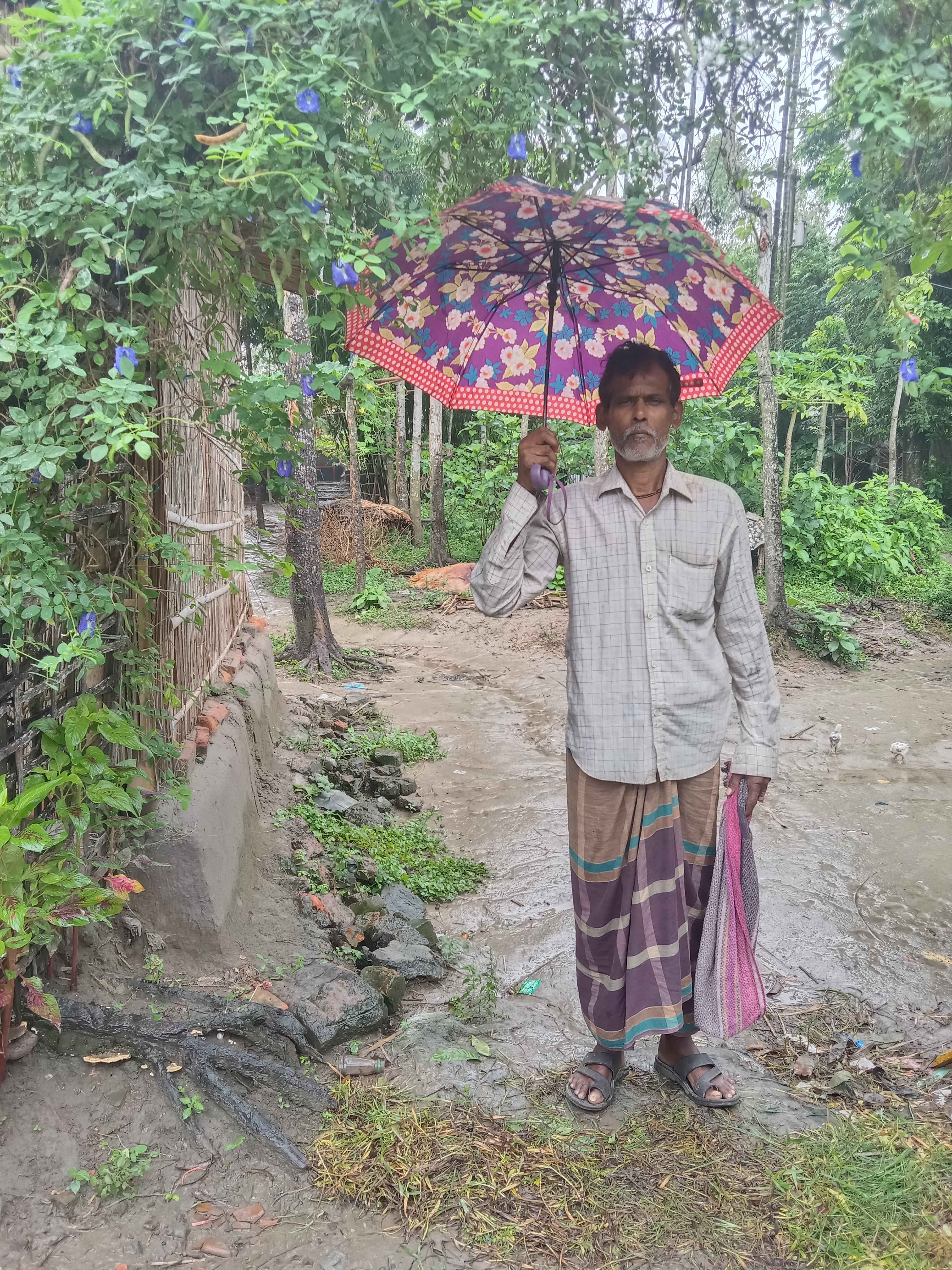
He also experienced losses during floods in 2007 and 2020, when he had to sell his bamboo products at unfairly low prices due to lack of transport. Climate irregularities have further worsened conditions as lack of rainfall reduces fish availability, while excessive heat affects health and productivity. Severe hailstorms damaged his house, forcing him to take loans for repairs. Storms once nearly blew away his thatched house, and recent heavy rains ruined his bamboo goods before sale. Illnesses in his family have increased, adding to financial strain.
Environmental changes have also affected agriculture and trees. Coconut trees no longer bear fruit properly, guavas are damaged by pests, and soil fertility has declined due to irregular rainfall. Rising heat makes physical labor difficult.
Due to the declining viability of bamboo work, he has sent one son abroad and another into construction work. Bamboo has become expensive and scarce, as fewer people cultivate it. Meanwhile, plastic products and factory-made goods have replaced traditional bamboo items such as sieves, baskets, and measuring containers. He said, “These companies have destroyed our profession. People no longer buy bamboo products.”