
By Happy Roy from Netrakona
In rural Bangladesh, women are often involved in rearing livestock alongside cultivating vegetables. These livestock help women meeting household nutritional needs and provide a reliable source of income. Selling eggs, ducks, chickens, and pigeons allows many rural families to manage daily expenses and gradually improve their financial condition. The open environment and natural surroundings of the villages make livestock farming a suitable and sustainable livelihood option.
Kulsuma Akter, a woman farmer from Atkapara village under Laxmiganj Union, has been rearing Hyderabadi, locally known as “Aseel,” chickens for the past seven years. Alongside poultry, she also raises local and “Mojapa” breed pigeons to support her family. Her husband works as a veterinary practitioner, but the family owns no cultivable land except their homestead. Today, the income from selling chickens and pigeons is what keeps the household running.
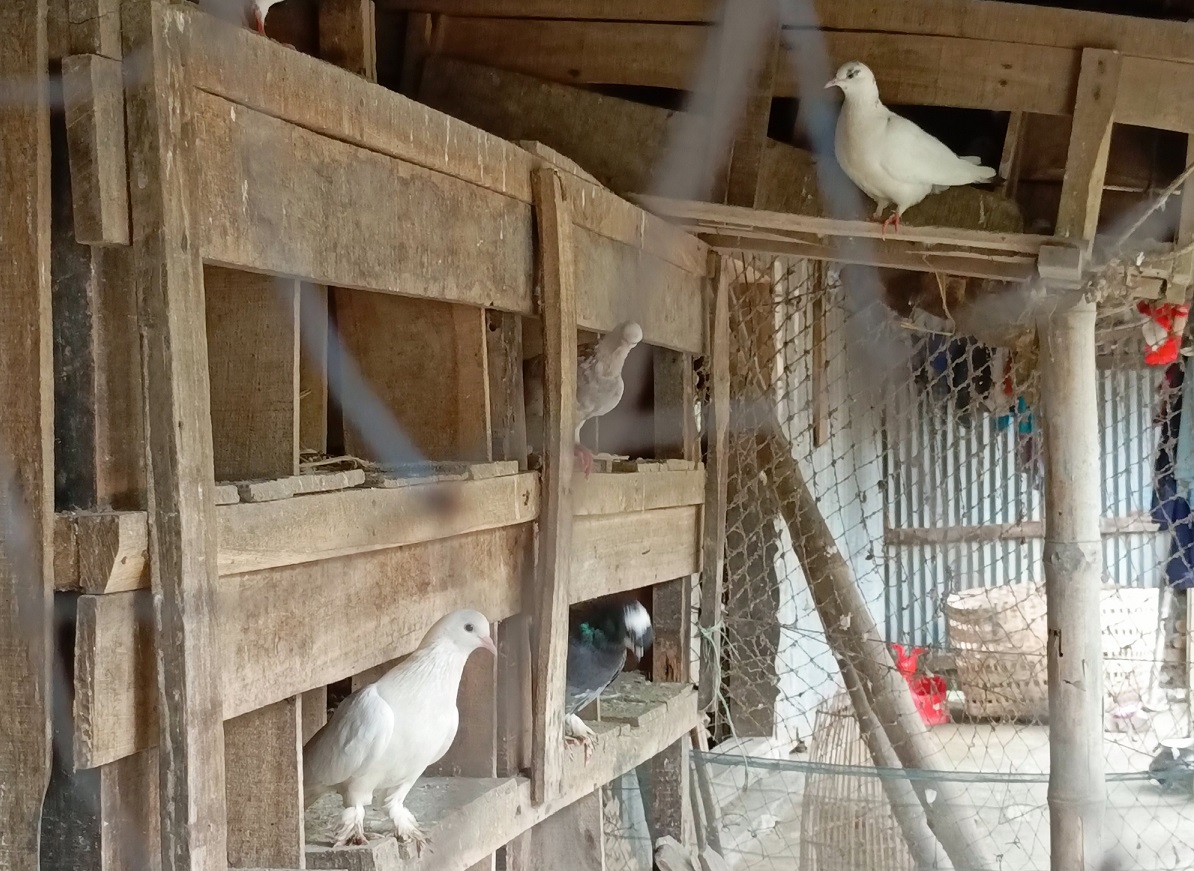
Kulsuma’s journey began when she bought two Aseel chicks from young farmer Md. Mamun Mia of Chakpara village. Mamun also taught her the basics of rearing the breed and explained its economic benefits. What started as a hobby soon became the family’s primary source of income. She now owns two roosters, three hens, and nine chicks, along with around 30 pigeons including 14 Mojapa pigeons and 16 local breeds.
The Aseel breed is larger and stronger than ordinary local chickens, with long necks and legs. Their meat is considered nutritious and flavorful, much like native chicken. A hen lays around five batches of eggs a year, nearly 200 eggs annually. However, Kulsuma says selling chicks is far more profitable than selling eggs.
One of the unique features of Aseel roosters is their fighting ability. Known for their aggressive nature, these birds are often trained for rooster fighting competitions. Kulsuma’s husband trains the roosters and takes them to contests held in different areas.
“There is a club in Madan Upazila where rooster fights are organized every winter,” Kulsuma said. “Winning roosters can be sold at high prices. We have sold four winning roosters for Tk 12,000 to Tk 16,000 each” she added.
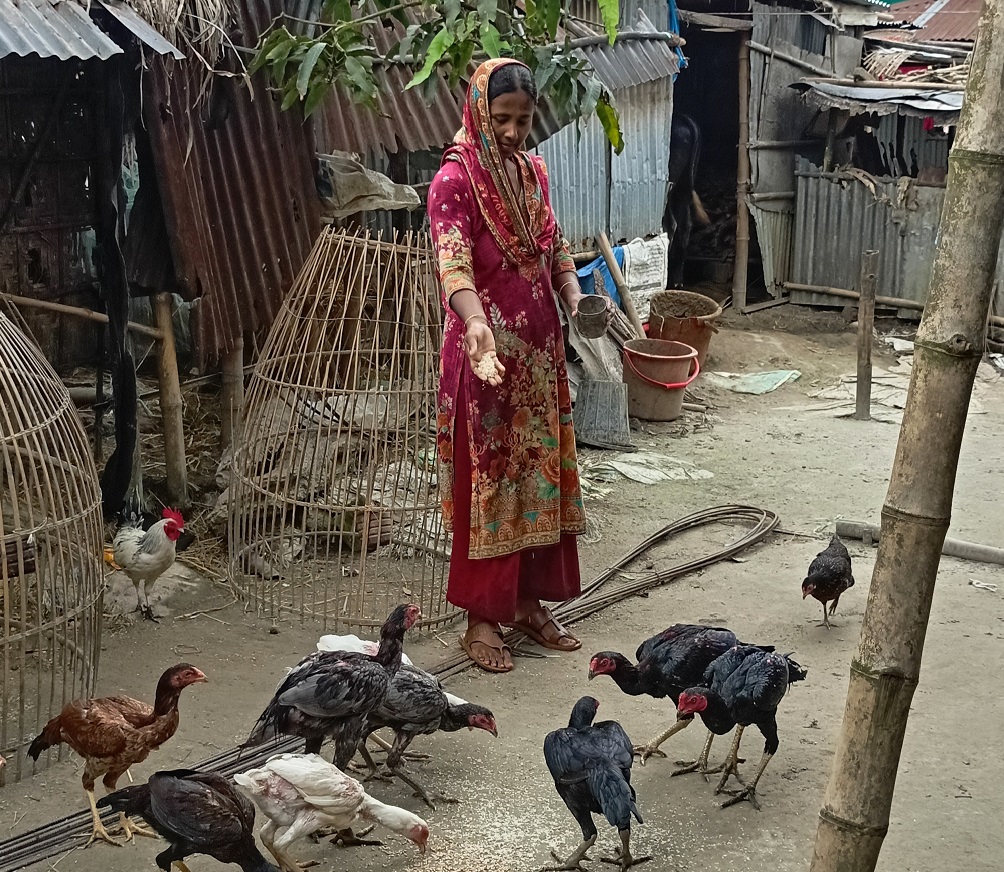
The birds are mainly fed rice, paddy, wheat, and boiled grains. To keep the fighting roosters healthy and strong, they are also given chickpeas, dates, and raisins as supplementary food. Despite their special use, the breed requires little extra care and is known to have strong disease resistance.
Alongside chickens, Kulsuma has been rearing pigeons for the last 13 years. She received her first pair as a gift from relatives after the birth of her eldest daughter. Since then, pigeon farming has become another dependable source of income. Each pair of pigeons is sold for around Tk 400 to Tk 500.
Kulsuma manages all livestock-related tasks herself such a s feeding, cleaning, and regular care while also handling household responsibilities. The income from poultry and pigeon farming now covers the education expenses of her three children as well as other household costs.
Although many families in Atkapara village raise local chickens, Kulsuma’s decision to rear Aseel chickens has given her a unique identity in the community. Villagers know her as a successful poultry farmer, while her husband has also gained recognition for participating in rooster fighting events across different regions.
Her story reflects the hidden strength of rural women in Bangladesh. Women like Kulsuma may not have formal education or high-paying jobs, but they possess valuable assets in the form of livestock. Whenever needed, they can sell animals to cover emergencies, support their families, or fulfill dreams without waiting for a monthly salary.
Today, Kulsuma Akter has become an inspiration in her village. Many women in Atkapara have started becoming financially self-reliant by buying chicks from her and following her path into livestock farming.