
By Happy Roy from Netrakona
It is often said that Bangladesh’s soil produces gold whether it is mainland farmland or the sandy river char. With the caring hands of farmers, even the most fragile land becomes productive. Compared to other seasons, the Robi (winter) season sees a wide variety of field crops and vegetables cultivated in rural Bangladesh. Along roadsides, in homesteads, and on riverbanks, lush green vegetable fields stretch as far as the eye can see. During this season, farmers grow vegetables to meet their household needs and for sale in local markets.
Farmers with limited landholdings, who cannot grow vegetables year-round, especially depend on the Robi season. This is when crop diversity is highest, and alongside designated farmland, river chars become an important additional resource. After the monsoon, large sandbars emerge along riverbanks during the dry winter months. Farmers who have homestead-adjacent access or customary ownership cultivate these chars, turning seasonal land into productive fields.
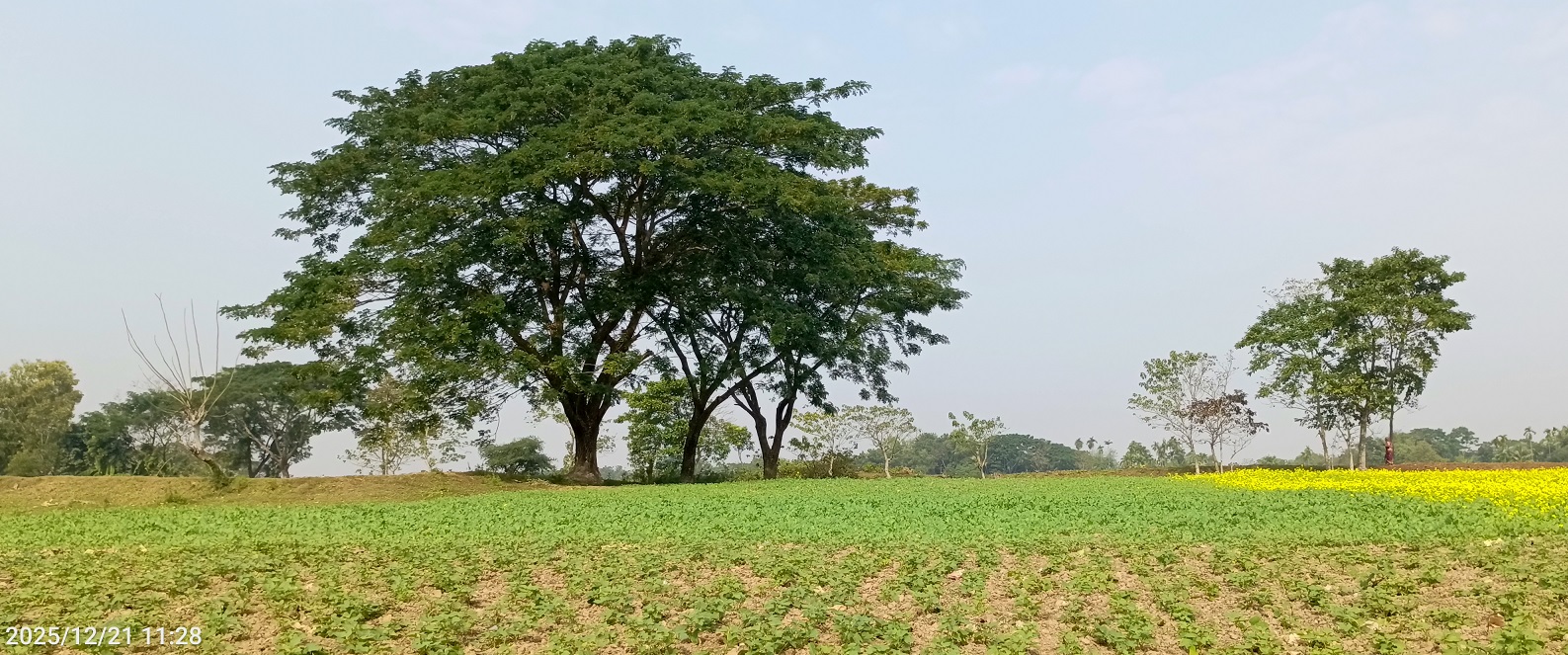
The Jidai River, flowing past Atkapara village in Lakshmiganj Union and alongside Mogora and Jayshid villages, follows this natural rhythm. Every dry season, chars rise along both banks of the river. On these temporary lands under their control, farmers cultivate a range of crops. Like previous years, this season farmers have grown mustard, groundnut, sweet potato, potato, chilli, eggplant, onion, garlic, coriander, tomato, and even rice seedbeds. Additionally to cultivated crops, farmers also collect naturally growing uncultivated plants such as boutta, khetaburi, and khuira from these lands adding bonus from uncultivated vegetation.
Farming on river chars offers multiple benefits. It ensures productive use of fallow land, supports crop diversification, requires relatively low amounts of fertilizer and pesticides, needs limited irrigation, and provides significant economic returns. During the dry season, char lands would otherwise remain unused. Bringing them under cultivation transforms idle land into productive, income-generating farmland.
Char soils are naturally fertile and rich in silt, making them especially suitable for organic and low-input farming. Compared to regular farmland, cultivation is easier, input costs are lower, and irrigation is often unnecessary due to nearby river water. Crops like groundnut and sweet potato thrive without additional irrigation, further reducing costs for farmers.
One such farmer is Jamal Mia of Atkapara village. He owns only 0.60 acres of land. During the Boro season, his land is fully occupied by rice, leaving no space for vegetable cultivation. With no separate plot for vegetables, he grows small quantities in his homestead yard to meet family needs. However, in the Robi season, Jamal cultivates crops on the river char. This supports his household consumption but also provides extra income. This year, he grew eggplant, potato, chilli, coriander, and mustard on the char land.
Jamal has access to about 0.80 acres of char land, inherited through family lineage. After the Liberation War, his father gained customary ownership of this land, and Jamal has been cultivating it during the winter season for the past five years. Like Jamal, around 15 other farmers in Atkapara village including Mosharraf Mia, Kamal Mia, and Zainal Ali regularly farm on the char every Robi season.
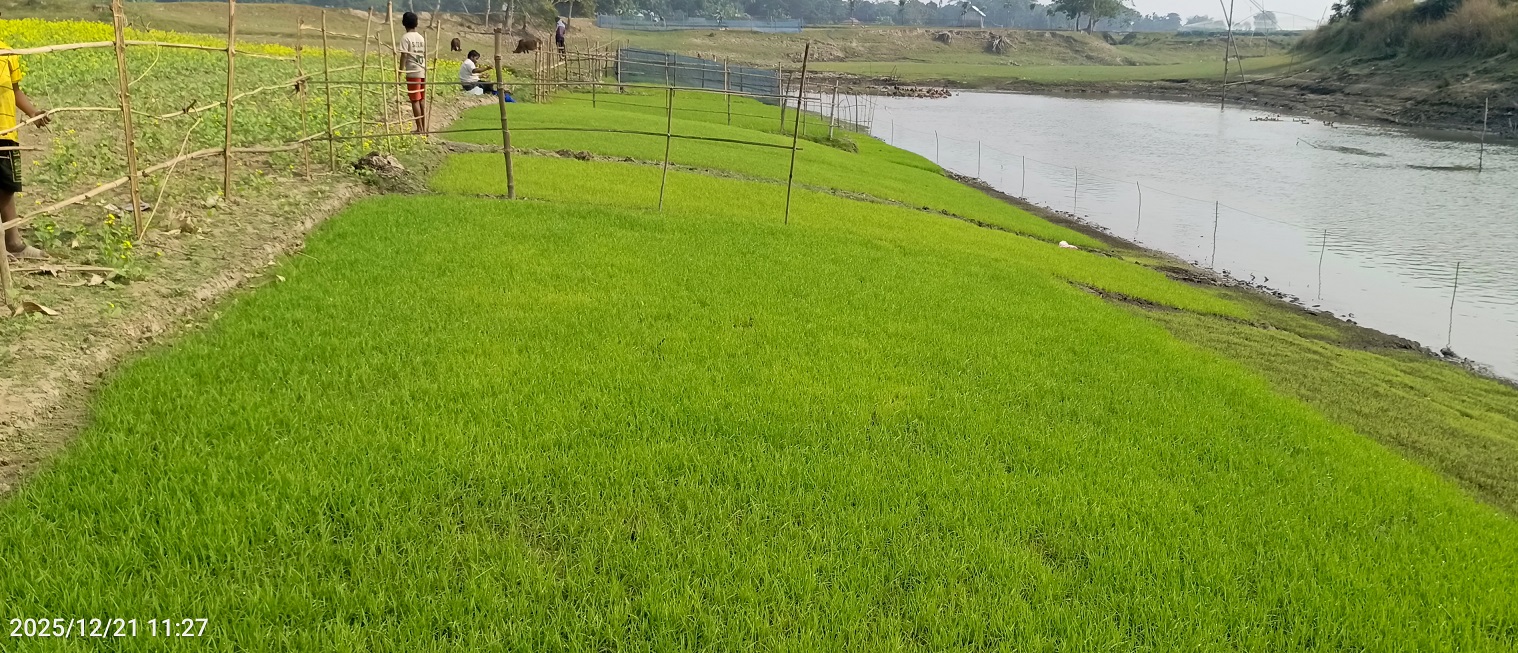
In Jayshid village, approximately 30 families, including Abul Mia and Maruf Mia, cultivate land along the river char adjacent to their homesteads. Some grow crops directly on the sandy soil, while others construct trellises to grow bottle gourd, sweet gourd, bitter gourd, and cucumber.
For land-poor farmers, winter is a season of hope. During other times of the year, river water makes cultivation impossible, but in the dry season, farming on chars becomes feasible. With low investment and minimal labour, farmers are able to produce good yields and earn profits. Encouraged by visible success, more farmers join each year. Demand for fresh, chemical-free vegetables is strong, and farmers receive good market prices.
Across Bangladesh, countless rivers flow through villages, carrying fertile silt that forms productive char lands. Farmers who have brought these lands under cultivation are already reaping the benefits. At a time when food and nutrition needs are rising and consumers are increasingly seeking safe food, farmers’ collective efforts ensure that no land remains unused. The scope of river-char cultivation continues to expand—and in the future, it promises to grow even further.