
By Md. Mofijur Rahman and S.M Osman Goni from Shyamnagar, Satkhira
On the banks of the Kholpetua River in Shyamnagar, life flows with the tide. For generations, the river has fed families, shaped culture, and protected the coast. On December 11, that deep connection came alive through a powerful lifestyle fair titled “Life Bound to the River,” held at Kamalkati village under Padmapukur Union.
Organized by BARCIK, Green Coalition, Kamalkati Ekota Youth Association, Kadbel Women’s Development Organization, and local residents, the fair was an exhibition and a collective declaration: protecting rivers means protecting lives.
At the entrance, symbolic pots filled with river soil, sand, mud, and saline water welcomed visitors. Elders explained that river soil builds homes, repairs embankments, and carries the memory of coastal civilization. Yet today, those same rivers are under threat from pollution, siltation, rising salinity, and climate change.
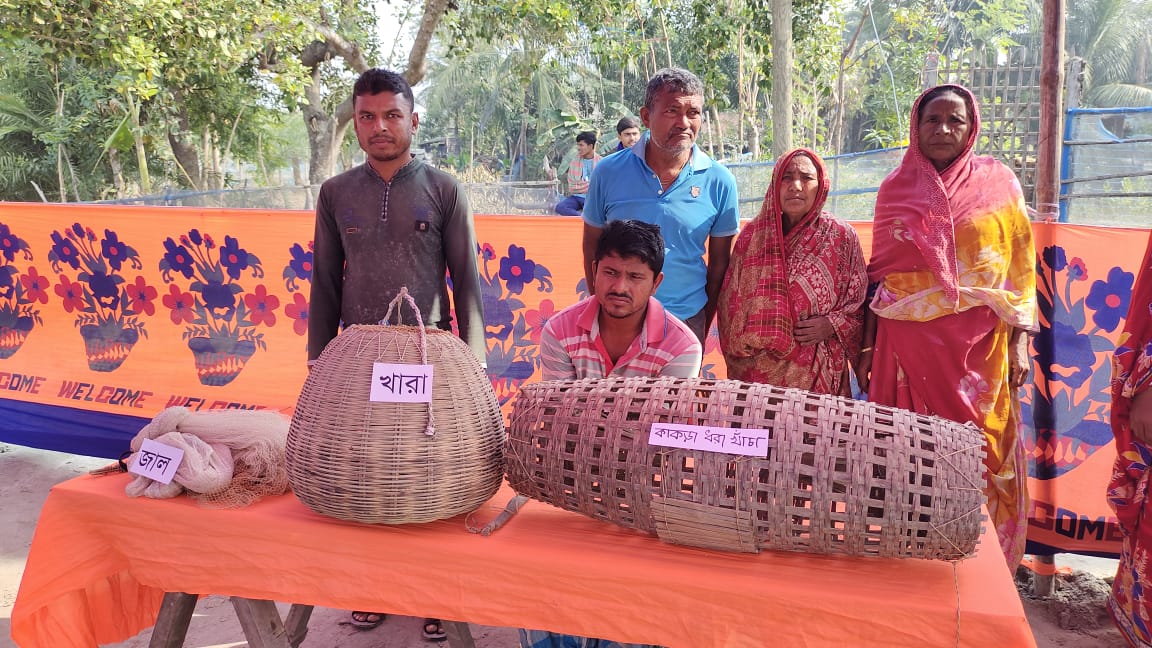
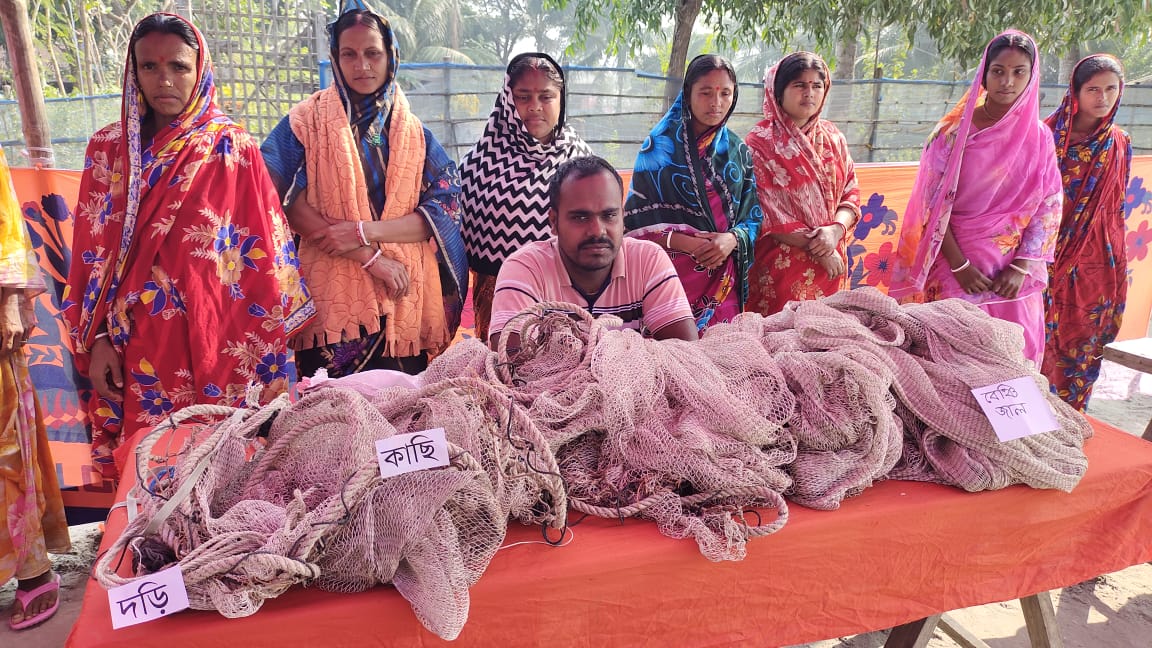
Traditional fishing tools, shells, and nets told stories of survival and struggle. Elderly fishers spoke quietly but firmly, ‘fish catches are declining, navigability is shrinking, but the river remains their only lifeline’. They said, “Our families, our children’s education everything depends on the river. If the river dies, we have nowhere to go.”
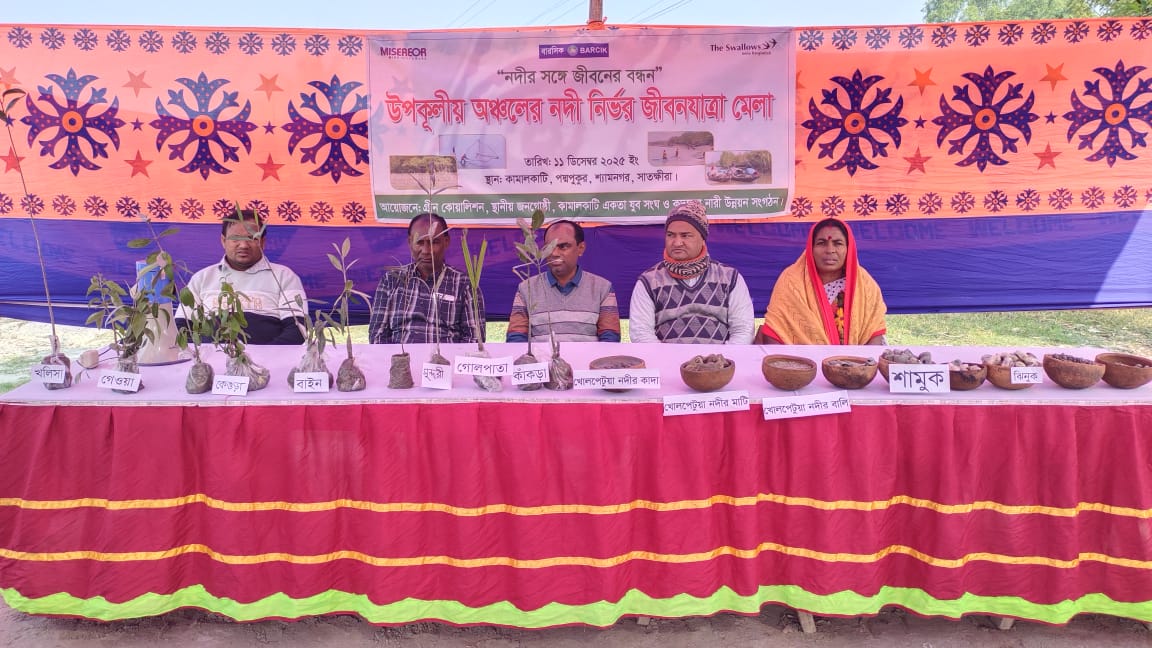
The fair also highlighted nature’s own defenders salt-tolerant plants such as keora, goran, gewa, golpata, and khalisha that grow along riverbanks and protect coastal communities from cyclones and tidal surges. Youth volunteer Gouranga Mondol reminded visitors, “These plants are our natural shields. Destroying them makes us more vulnerable.”
Young voices echoed hope. School student Ananya Mondol said the fair helped her learn beyond textbooks and inspired her to join river protection efforts. Teachers and community leaders stressed that such spaces help the next generation to understand both the value of rivers and the injustice they face.
Local residents described the event as a “living classroom,” where life, history, and resistance met. One message resonated throughout the day, ‘saving rivers is not an environmental choice rather it is a human rights necessity.