
By Shibani Chakravarty and Bimal Roy
During the current winter season in Uttar Putail village, female farmer Sufia Begum has cultivated around 30 decimals of land in plot form. She grows 18–20 varieties of vegetables, including cauliflower, cabbage, white and red radish, long yard beans, red amaranth (local variety), bottle gourd and sweet gourd, spinach, flat beans (Noltushi and Baita varieties), onion, garlic, long beans, sweet corn, radhuni, coriander, chili, eggplant, bitter gourd, and mustard greens. She earns income by selling these vegetables daily for her family’s needs at the local Putail market and Lemubari Hat.
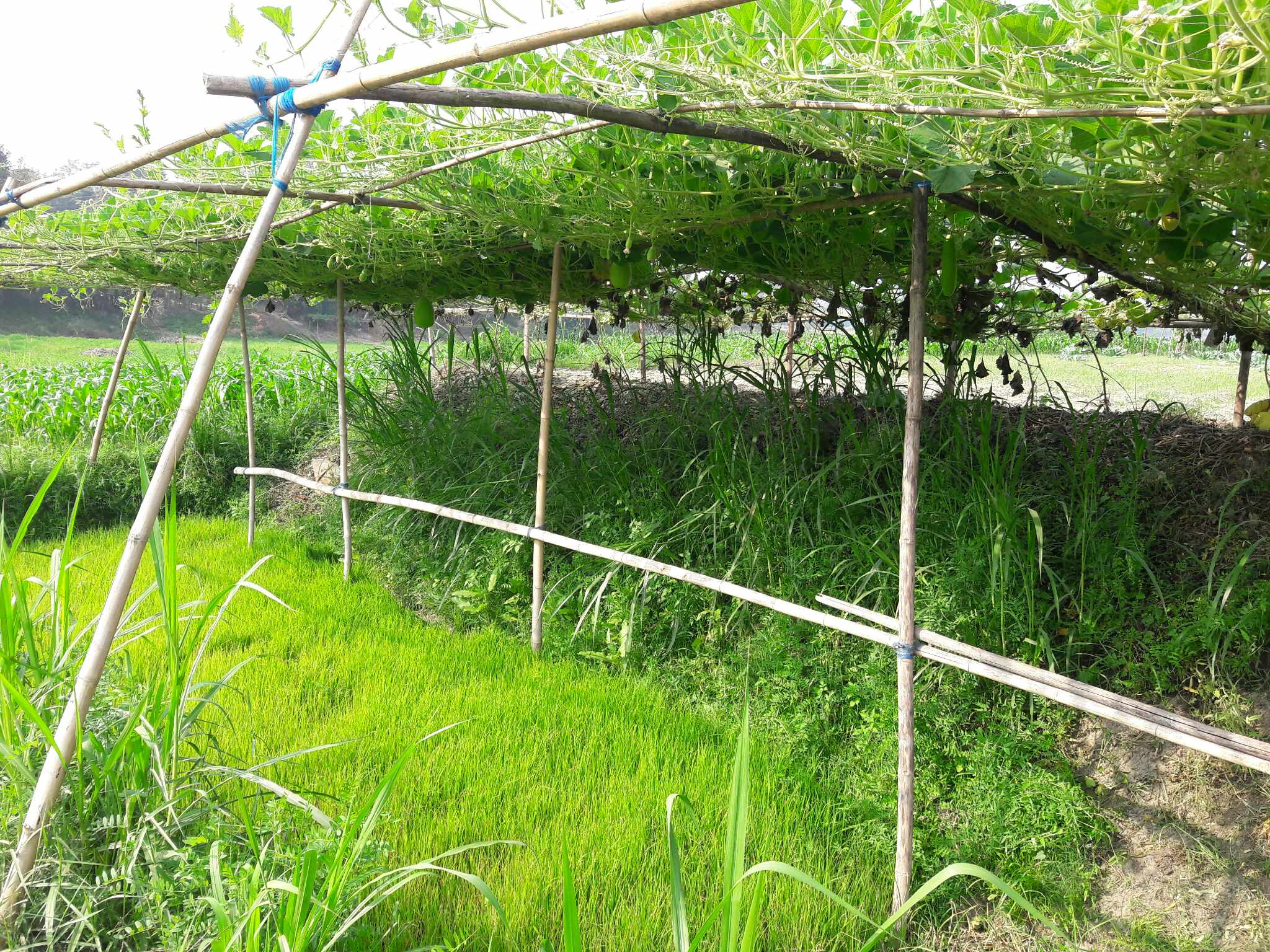
Sufia Begum is 65 years old and a mother of four daughters. Her husband is ill. All her daughters are married and busy with their own families. She learned agriculture from her family tradition. For several years, she has been cultivating multiple seasonal vegetable crops on the same land to maintain soil health and ensure safe food production in an environment friendly manner.
Alongside vegetable farming, this season she also cultivates Jamri variety Boro rice on the sandy banks of the Kaliganga River, where she achieves good yields. On land adjacent to the riverbank, she is also growing muskmelon. Next season, she plans to cultivate bitter gourd, jute, ridge gourd, ash gourd, chili, eggplant, sesame, sponge gourd, okra, stem amaranth, red amaranth, Malabar spinach, pointed gourd, and several other summer vegetables on the same 30 decimals of land.
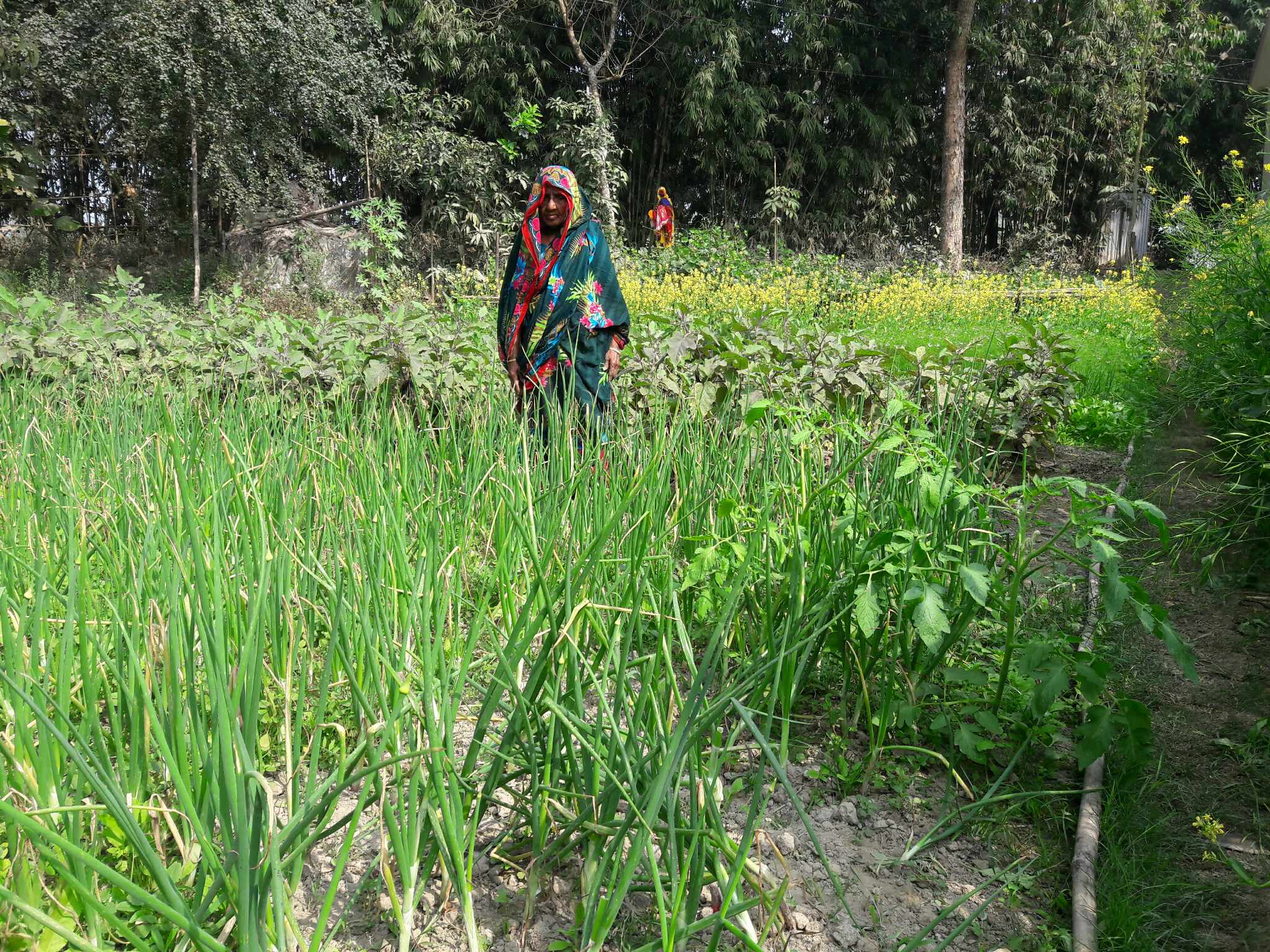
She uses organic fertilizer made from decomposed water hyacinth and also applies ash produced by burning dried water hyacinth. She does not use chemical fertilizers or pesticides. Sufia Begum’s safe food production practices are a highly promising initiative. She manages her agricultural livelihood with her own two bighas of land, along with two additional bighas leased from others. She also rears chickens and goats at house as well.
Sufia Begum says, “I am self-reliant. I do not wait for help from others. I have not received any government incentives or support.” Women like Sufia Begum are the true strength of agriculture.