
By Monika Paik from the coast
In the coastal belt near the Sundarbans, a quiet cultural crisis is unfolding. The Munda community, one of the indigenous groups in Bangladesh is gradually losing their language, traditions, and identity.
Though the exact history of their migration remains unclear, evidence suggests that the Mundas originally came from the Ranchi region of present-day Jharkhand, India. They were brought to the Sundarbans during the early 20th century to clear forests and establish settlements.
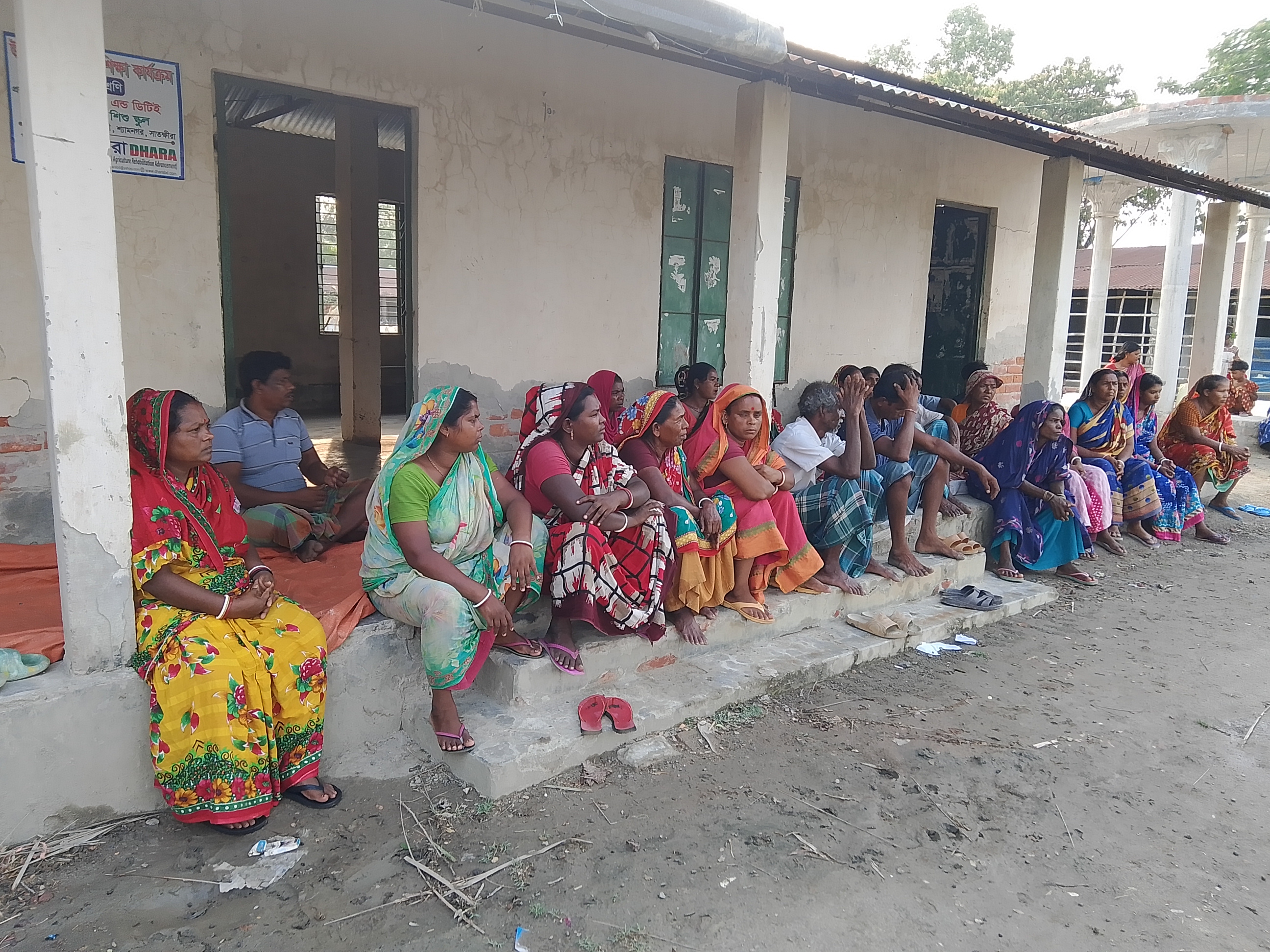
Today, in areas like Burigoalini Union of Shyamnagar Upazila in Satkhira, over a hundred Munda families live in resettlement clusters. Once landowners, many are now landless, struggling to survive.
Kalyani Munda, a resident of a local housing project said, “We are losing everything; our land, our language, our culture. Only a few elderly people can still speak our language properly.”
The Munda language, believed to be over 1,500 years old, is now on the verge of extinction due to lack of use among younger generations.
Traditionally nature worshippers, the Munda community celebrate the Karam festival each year. However, climate change has led to the decline of Karam trees in the Sundarbans, disrupting their cultural practices.
Nilkanta Munda explained that although their ancestors cleared the land, they were never granted ownership. “We were given small plots just to live on, but no rights over the land we developed,” he said.
Most Munda families now depend on manual labor for survival working in others’ fields, fishing in rivers, or taking on any available work. Women often work even during pregnancy, reflecting the harsh realities of their lives.
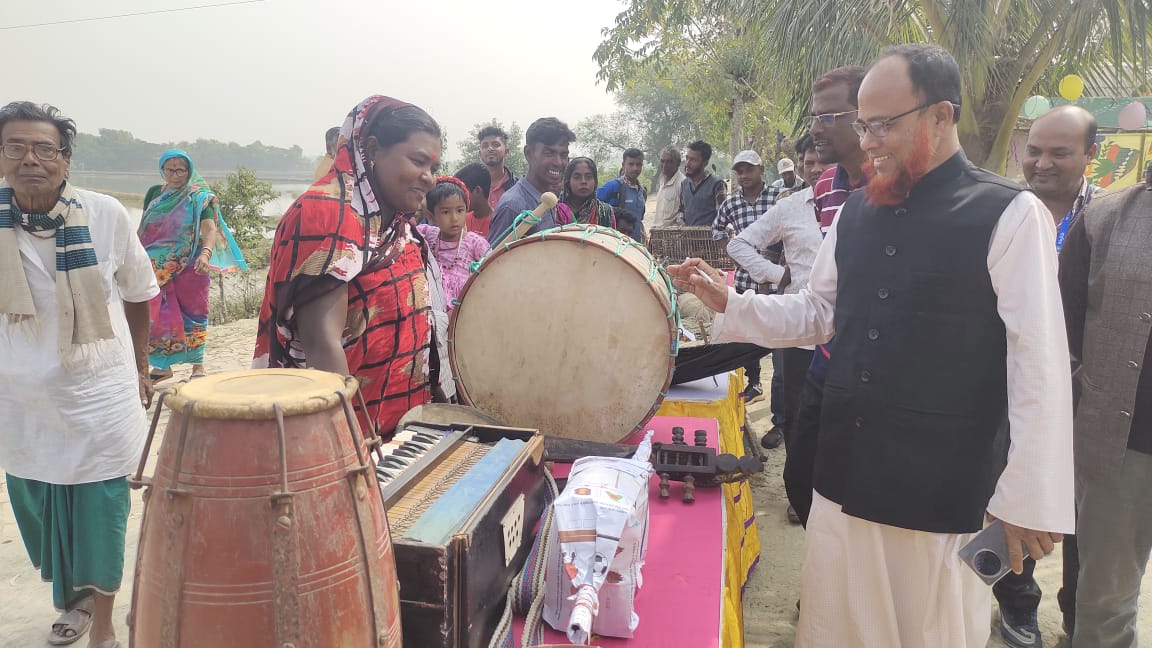
Despite their hard work, fair wages remain elusive. Many lack financial literacy, making them vulnerable to exploitation. Education is also limited, with most children unable to attend school regularly.
Yet, amid these challenges, they hold onto certain traditions like preparing haria, a traditional fermented drink made from rice and herbal mixtures, passed down through generations.
The Munda community faces multiple challenges: food insecurity, lack of clean water, limited livelihood opportunities, and restricted access to education. Climate change has further reduced their ability to engage in agriculture.
Despite these hardships, there is little visible support from government or non-government institutions beyond occasional disaster relief. Sustainable development initiatives remain scarce.
To preserve their identity and improve their living conditions, coordinated efforts are essential. Without intervention, the Munda community risks not only economic marginalization but also the permanent loss of their cultural heritage.